


Care suited to cats,
in a separate, cat-only space
Caring for cats involves more than treating disease: the environment should suit their physiology and behavior.
Our Cat Hospital is separate from the dog wards, and staff routes pass through a Feliway zone (a calming feline pheromone), so cats are seen in a separate space designed to reduce visual and auditory stress.
Our dedicated feline technicians have completed Fear Free training, so treatment takes each cat's emotional comfort into account, and we aim to reduce anxiety and stress with a cat-friendly environment.
-
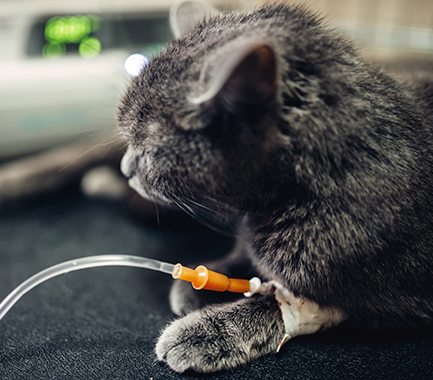
About 40,000 feline cases
We have treated more than 15,000 cats across more than 40,000 cases. -
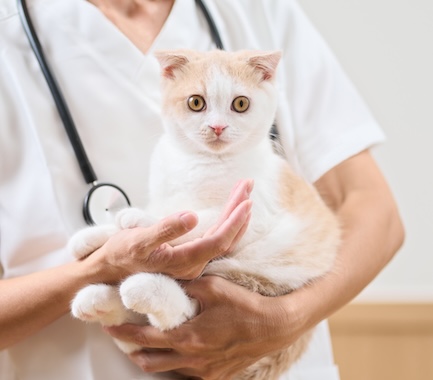
Fear Free-trained staff
Fear Free-trained staff examine and treat with each cat's emotional comfort in mind. -
Cat Friendly Clinic
A treatment environment built around feline needs. (Yangsan hospital: accredited Cat Friendly Clinic, Gold level) -
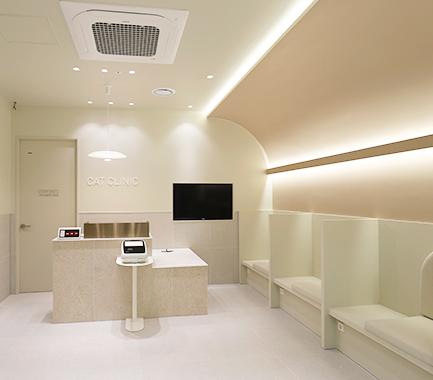
A separate, cat-only space
The waiting area, exam rooms, treatment room and wards are fully separate, and lighting, humidity, scent and noise can be adjusted.
Care for serious feline conditions
Cats differ from dogs in many ways, and their main diseases often differ too. Our veterinarians experienced in feline medicine provide in-depth care for these conditions.-
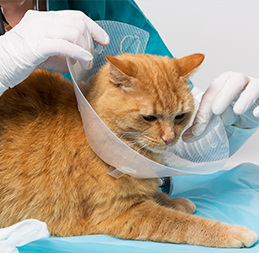
Feline urinary disease
Treatment for feline urinary disease includes management of idiopathic cystitis, minimally invasive cystoscopic stone removal, ureteral stone surgery (SUB, subcutaneous ureteral bypass) and dialysis for acute kidney injury. Accurate diagnosis and appropriate treatment, with your cat's health and comfort as the priority. -
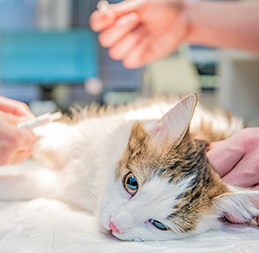
Feline heart disease
We treat hypertrophic cardiomyopathy (HCM), heart failure and valve disease, using diagnostic imaging (including echocardiography) and in-depth care from our cardiology team. Because heart problems can become life-threatening, our Ulsan hospital provides 24/7 emergency care. -
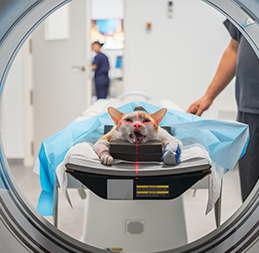
Feline cancer
Radiation therapy and chemotherapy are coordinated with S Animal Cancer Center, and our internal medicine, surgery and diagnostic imaging teams work together to choose the most suitable treatment plan for your cat. -
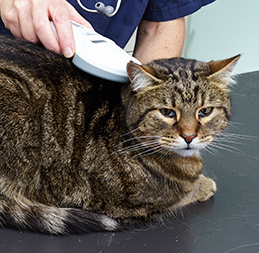
Feline endocrine disease
Diabetes and hyperthyroidism are common in cats. Without good management, they can worsen and lead to other complications. Alongside in-depth treatment, we provide a long-term management plan to help keep your cat's daily life comfortable. -
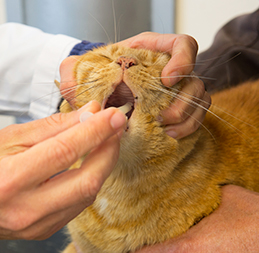
Hard-to-treat feline disease
Conditions such as feline chronic kidney disease and IBD are often difficult to cure with current treatments. When a cat does not respond to standard treatment, stem cell therapy may be considered as an alternative. Stem cell therapy uses stem cells to promote the regeneration of damaged tissue, which can improve treatment results. -
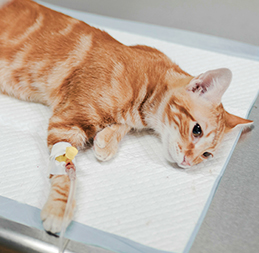
Feline blood transfusions
We keep type A feline blood in stock, so transfusions are available for cats that need one in an emergency.
What we treat
-
01
Infectious disease
- Feline infectious peritonitis (FIP)
- Panleukopenia
- Herpesvirus infection
- Calicivirus infection
- Feline leukemia virus (FeLV)

-
02
Respiratory disease
- Upper respiratory infection
- Asthma clinic
- Rhinitis & frontal sinusitis clinic
- Lower respiratory clinic (pneumonia, pneumothorax, chylothorax)
- Nasopharyngeal (inflammatory) polyps

-
03
Digestive disease
- Inflammatory bowel disease (IBD)
- Triaditis (inflammation of the liver, pancreas and intestines)
- Liver & biliary disease
- Chronic constipation
- Chronic diarrhea

-
04
Skin disease
- Atopy, allergy, hypersensitivity
- Ringworm (dermatophytosis)
- Idiopathic ulcerative dermatitis

-
05
Urinary disease
- Acute kidney injury and chronic kidney disease
- Idiopathic cystitis
- Stones and crystalluria

-
06
Cardiovascular disease
- Cardiomyopathy
- Thromboembolism
- Heartworm
- Hypertension
- Congenital heart disease


