


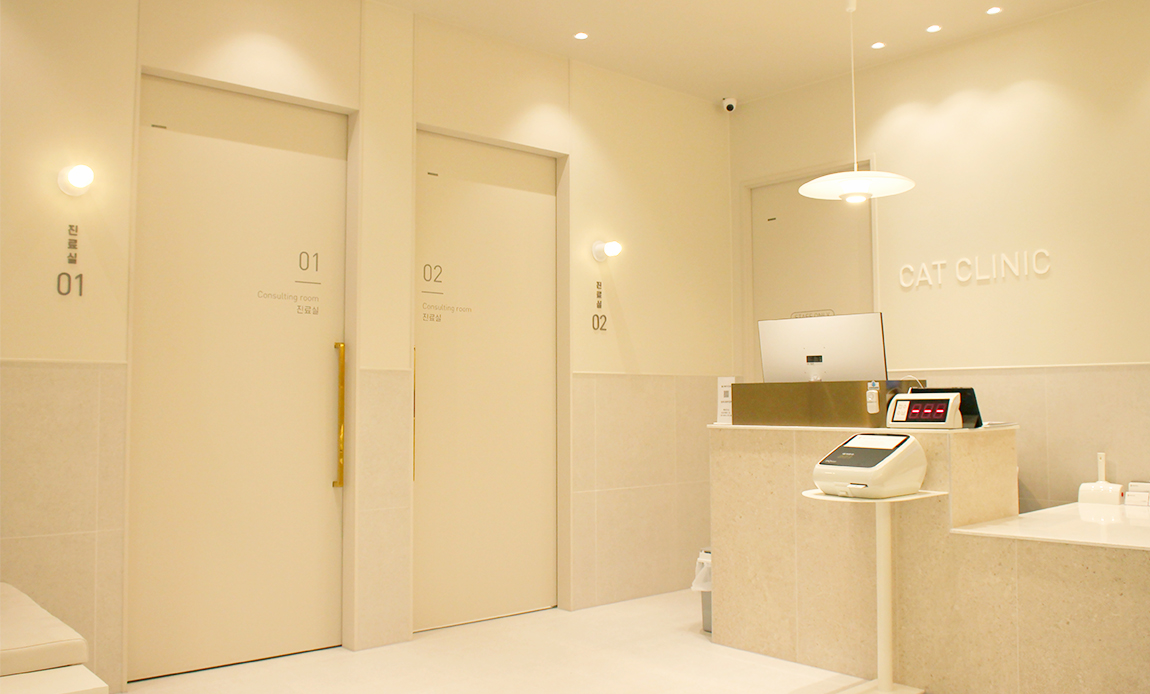
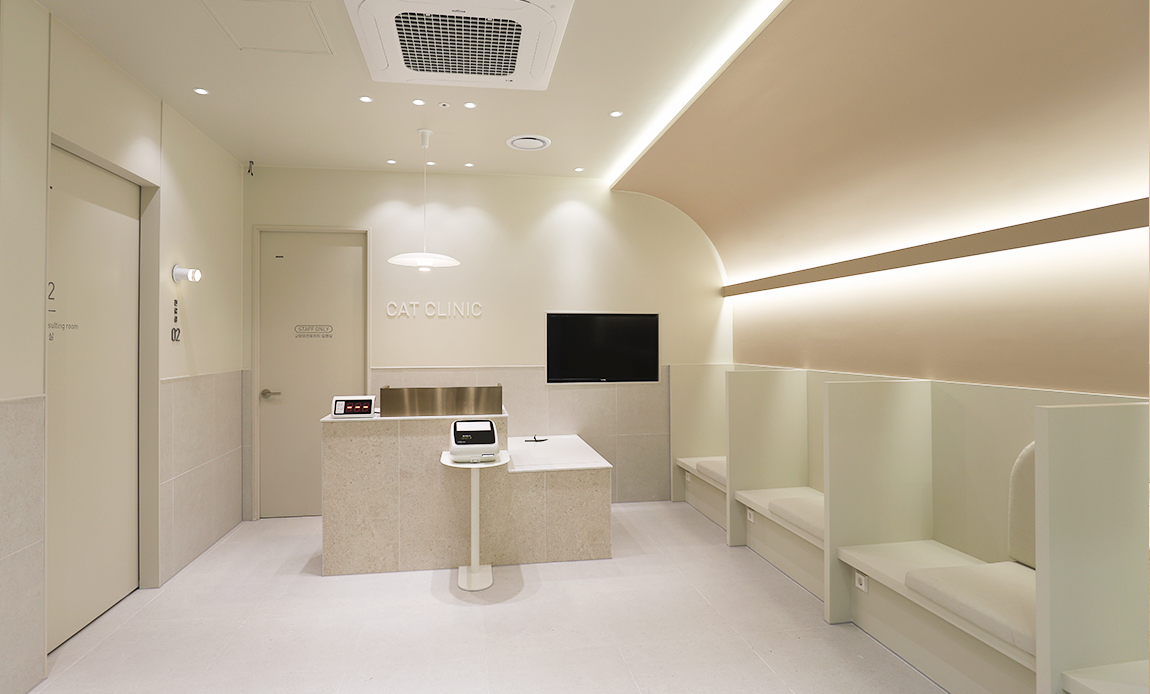
Dogs are seen on the 2nd floor and cats on the 3rd, so cats wait apart from other patients. The space is designed to be cozy and quiet, to keep stress to a minimum during examinations.
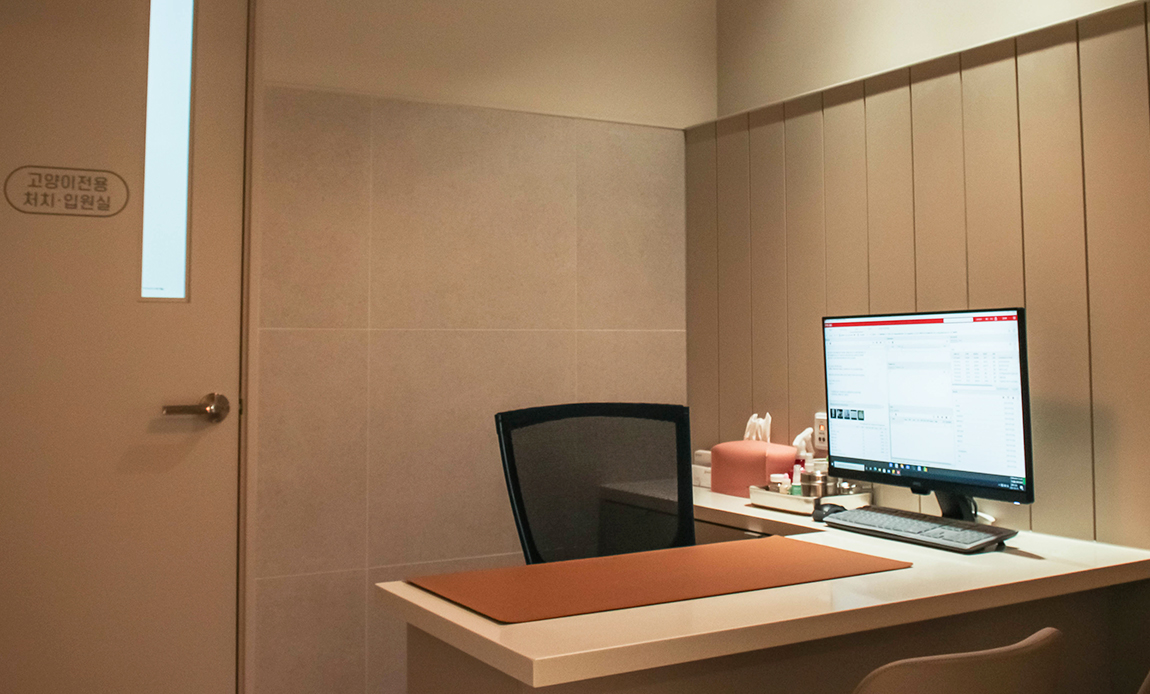
Exam tables have built-in heated mats so cats aren't startled by a cold surface, and adjustable lighting keeps the room soft and glare-free for a calm examination.
- General ward
- Intensive care
- Isolation ward
-
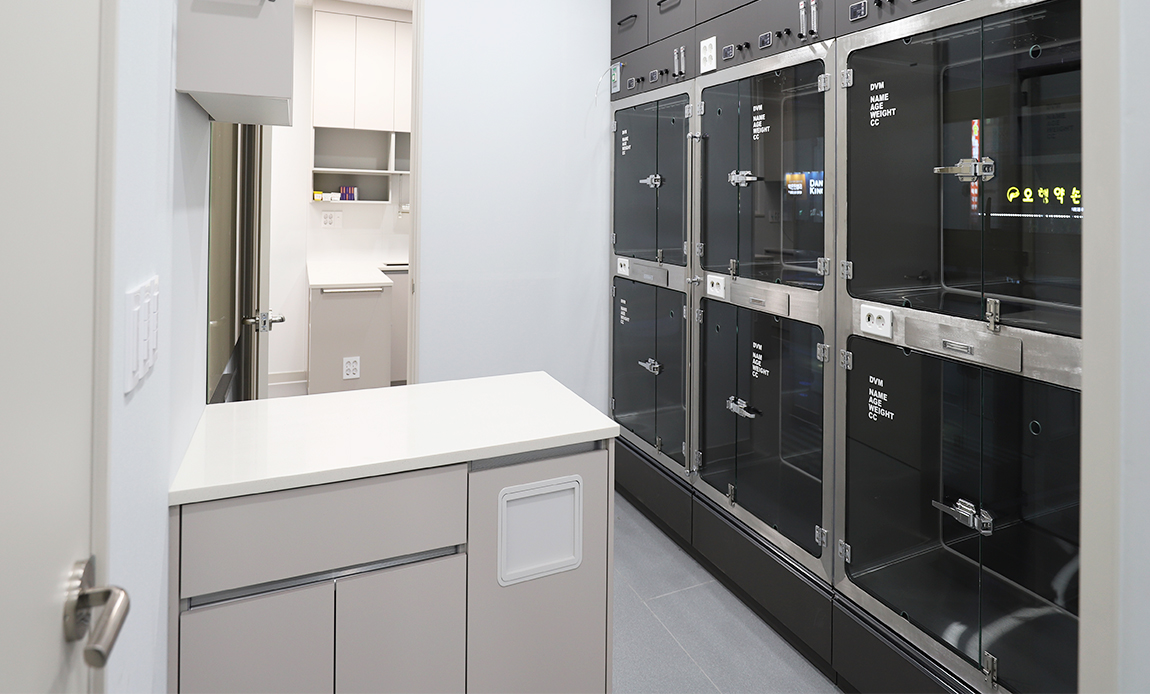
Because cats are sensitive to sound, the feline wards and treatment room are physically separate from the dog wards, and are laid out as a dedicated Feliway zone to reduce stress during a hospital stay.
Cats are visually sensitive, so lighting can be dimmed as needed. Each kennel has heating to maintain body temperature, internal temperature control, oxygen supply and its own ventilation — helping cats recover in comfort.
-
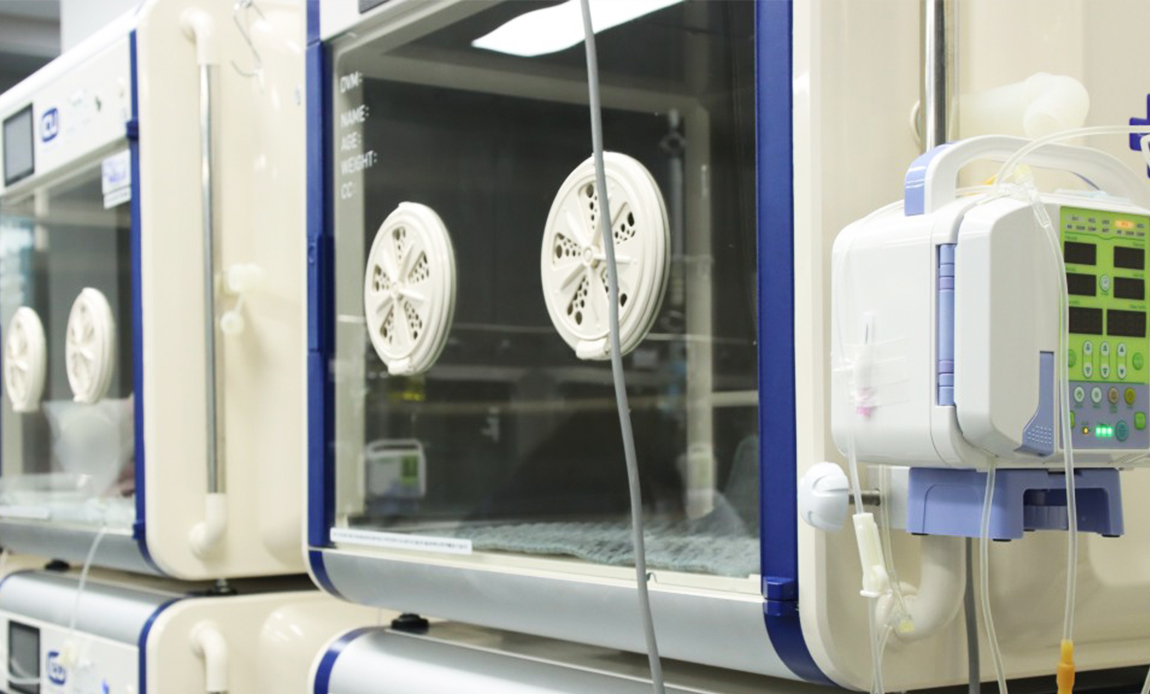
Because cats are sensitive to sound, the feline wards and treatment room are physically separate from the dog wards, and are laid out as a dedicated Feliway zone to reduce stress during a hospital stay.
Cats with emergencies or serious illness are cared for in a separate intensive care ward to support a faster recovery.
-
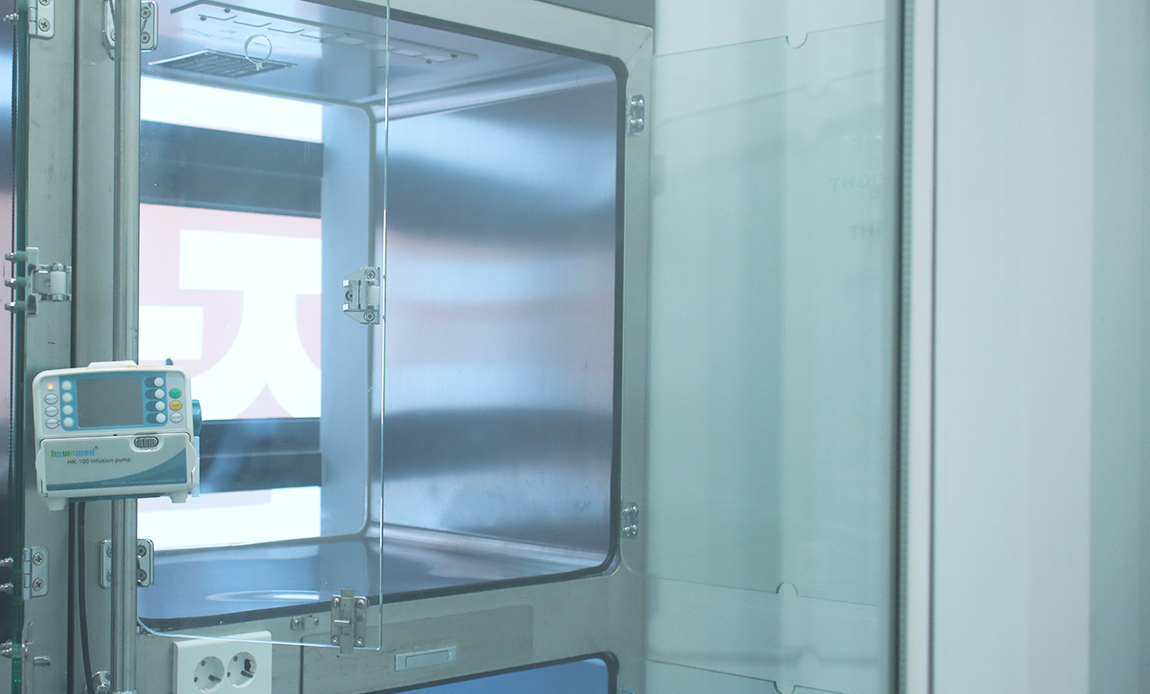
Because cats are sensitive to sound, the feline wards and treatment room are physically separate from the dog wards, and are laid out as a dedicated Feliway zone to reduce stress during a hospital stay.
There is also a separate isolation ward for cats with weakened immunity. For these patients, exposure to infectious disease can become serious, so isolation helps us manage and prevent infection in advance.

